Cape Town‘s Journey to Solar-Powered Street Illumination
Urban areas struggle to find solutions for public lighting that meet both practical needs and environmental concerns. solar streetlights present an innovative way forward. They illuminate roads efficiently while minimizing electricity costs. This technology taps into renewable energy, making it a smart choice for modern cities aiming for sustainability. As cities grow, the need for energy-efficient solutions becomes even more pressing.
Increasing awareness of climate change drives cities to explore greener alternatives. Transitioning to renewable sources is not just a trend; it is vital for mitigating the damaging effects on our planet. By reducing reliance on fossil fuels, cities like Cape Town can contribute positively to the environment. The impact of transitioning to solar power is far-reaching, affecting aspects of urban infrastructure development and planning.
Cape Town has taken significant strides toward embracing this technology. The city’s initiative to install solar streetlights marks an important step in enhancing urban illumination. Not only does this effort aim to provide better lighting for residents, but it also prioritizes energy efficiency and climate resilience. As this program unfolds, it offers a glimpse into what a sustainable, eco-friendly future could look like for urban environments across the globe.
The Need for Solar Streetlights in Cape Town

Urban areas like Cape Town grapple with various challenges related to traditional street lighting. Often, these systems consume a significant amount of energy. This high energy demand can strain the city’s already burdened infrastructure development. As the population grows, so does the need for efficient lighting solutions. Concerns about the reliability of conventional lights are also prevalent, especially during power outages.
Public lighting effectiveness suffers in many parts of the city. Dimly lit streets can create safety issues, leaving pedestrians vulnerable. Many neighborhoods experience feelings of insecurity at night. Moreover, these conventional lights contribute to environmental impact, releasing carbon emissions that further exacerbate climate change. An innovative solution is necessary to combat these problems.
Energy efficiency becomes increasingly essential in the modern world. A shift towards renewable energy sources not only addresses sustainability but also promotes a smarter, more connected city. By investing in solar power, Cape Town can harness a clean and abundant resource. Such a transition would lead to brighter and safer urban illumination. Community confidence in public spaces might increase as well.
Traditional lighting systems, reliant on the grid, present limitations that cannot be ignored. Power cuts affect their functionality, leading to dark areas that can foster crime. Citizens deserve reliable lighting that supports their safety and well-being. Solar streetlights offer a unique opportunity to redesign the urban landscape. This change could ultimately enhance the experience of all who live, work, or travel through the city.
As Cape Town explores these options, the potential benefits of solar-powered solutions become clear. Improved lighting can mean improved safety, new installations can be easier to maintain, and they are less dependent on fluctuating energy costs. This journey toward smart city initiatives encourages innovation and responsible stewardship of urban spaces.
Cape Town’s Solar Streetlight Initiative
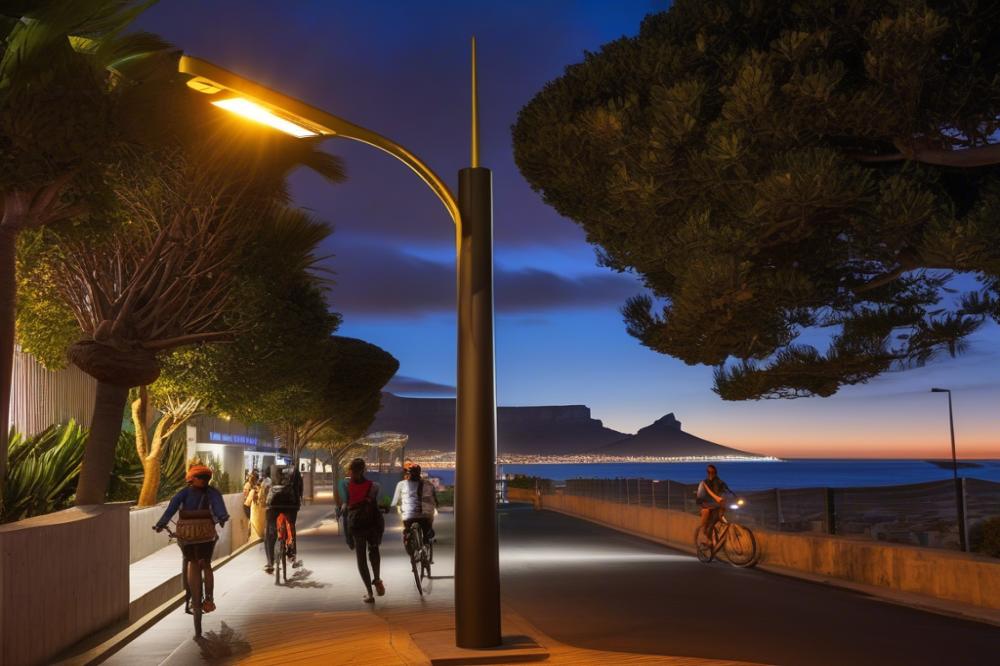
The Solar Streetlight Initiative in Cape Town began with a vision to improve urban illumination while promoting sustainability. Officials sought to reduce reliance on traditional energy sources. The project’s primary goal is to harness renewable energy and create a lasting impact on both the environment and the community. This initiative reflects a growing awareness of climate change and the need for innovative solutions.
Collaboration plays a key role in this endeavor. Local governments partnered with private sectors to pool resources and expertise. This teamwork fosters greater innovation and investment in energy-efficient technologies. Engaging various stakeholders has helped the city to accelerate infrastructure development. Together, they aim to enhance public lighting and ensure its success across all neighborhoods. The effort represents a shared commitment to building a greener future.
Different types of solar lights are now lighting the streets. Each system is designed with advanced technological features. These lights include efficient LED bulbs for reduced energy consumption. Some units come equipped with motion sensors, enhancing safety by brightening only when movement is detected. Additionally, many of them feature integrated batteries that charge during the day to provide consistent illumination at night. Such developments reflect not just a focus on functionality, but also an initiative to elevate the overall quality of life within the city.
Integration of solar power fits seamlessly into the broader smart city initiatives in Cape Town. As the city progresses towards modernization, technology plays a vital role. By embracing intelligent systems, urban planners can monitor energy consumption and optimize resources effectively. This approach not only promotes energy efficiency but also helps gather data on the environmental impact of the new infrastructure. With these innovations, Cape Town is paving the way for a more sustainable urban environment.
Environmental Impact and Energy Efficiency
The implementation of solar-powered public lighting in Cape Town is a game changer for the environment. By utilizing renewable energy sources, the city aims to significantly reduce its carbon footprint. This shift is crucial, especially in the wake of climate change, where every action counts. Through this sustainable initiative, Cape Town is taking a step forward in fighting global warming.
Long-term energy savings emerge as another major benefit of harnessing solar power for urban illumination. Unlike traditional streetlights, which burden the electrical grid, solar systems generate their own energy. This means reduced electricity costs for the city over time. Such financial savings can be redirected to other areas of infrastructure development. In essence, investing in renewable technology makes economic sense.
Moreover, these solar solutions enhance sustainability in urban settings. The city’s move toward cleaner energy reflects a commitment to a smart city model that prioritizes ecological responsibility. Energy efficiency is not just a buzzword; it is a necessity in today’s world. Utilizing solar energy for streetlights helps to diminish reliance on fossil fuels, thus mitigating the adverse effects of resource depletion.
Solar streetlights serve a dual purpose. Not only do they provide vital urban illumination, but they also minimize energy waste. By activating only when needed, these systems ensure optimal performance and intelligent resource management. As Cape Town embraces this green technology, the prospects for a more sustainable urban landscape grow brighter.
Community Engagement and Awareness
The journey of Cape Town towards a brighter future with energy-efficient public lighting has involved local communities from the very start. Residents have been encouraged to participate in discussions about the new infrastructure development. Town hall meetings have served as a platform for voices to be heard. People have shared their thoughts and concerns, which helps shape the project.
Educational campaigns have played a vital role in this initiative. Schools and community groups have organized workshops focusing on renewable energy and its benefits. These sessions highlight how solar power can reduce reliance on traditional energy sources. They also explain the broader context of climate change and how urban illumination solutions can combat it.
User feedback is crucial in refining the street lighting project. Many locals share their experiences regarding brightness and safety after installation. This input helps authorities understand the effectiveness of the system and where improvements may be needed. Additionally, engaging the community fosters a sense of ownership. Residents begin to feel invested in the outcome.
Through these efforts, Cape Town has taken steps toward becoming a smart city. Environmental impact is a constant consideration, with a focus on enhancing energy efficiency. The collaborative approach creates transparency and builds trust between citizens and city officials. Public participation helps connect residents with their environment and deepens their understanding of sustainability.
The success of the project relies not only on technology but also on the support of the community. When people feel involved, their enthusiasm often leads to a stronger commitment to the cause. Cape Town’s initiative is a shining example of how engaging local voices can lead to meaningful change in urban spaces.
Challenges and Future Prospects
Technical and Logistical Challenges Faced During Implementation
Implementing solar power for urban illumination has not been without its hurdles. One major issue is the technical complexity of integrating these systems into existing infrastructure. Installing new poles and lighting fixtures often clashes with old electrical grids, creating delays. Weather conditions can also prove challenging. Heavy rains and storms might interrupt the setup process, impacting schedules. Additionally, the technology involved needs ongoing maintenance to function efficiently.
Logistically, deploying solar-powered units across Cape Town requires detailed planning. Urban areas are dense. Finding suitable locations that receive adequate sunlight becomes crucial. Moreover, managing public expectations plays a role. Residents may have concerns about changes in their neighborhood. Misinformation can spread quickly, making clear communication vital.
Analysis of Costs Versus Benefits for the City
When discussing costs, it’s essential to weigh them against potential benefits. Initial expenses for solar systems are high, but they promise long-term savings. Using renewable energy reduces dependency on traditional power sources, decreasing overall costs. Cape Town can expect lower utility bills as energy efficiency improves. Over time, this could redirect funds to other critical areas like health and education.
The environmental impact of solar power is another positive aspect. Using clean energy helps combat climate change, benefiting future generations. Reducing the carbon footprint is a significant goal for the city. Moreover, solar lighting contributes to public safety. Better illuminated areas can lead to decreased crime rates and increased community engagement. The shift to more sustainable practices creates a ripple effect in the community.
Future Plans for Expanding Solar-Powered Infrastructure in Cape Town
Future prospects for solar-powered infrastructure look promising. Plans are underway for large-scale installations throughout various neighborhoods. The city aims to become a smart city by integrating advanced technologies into its operations. Expanding the solar initiative could also involve partnerships with private companies. Collaboration may help fund projects and enhance innovation.
Cape Town envisions not only streetlights powered by solar but also other public lighting systems. Parks and public squares could benefit from this shift. Additionally, educational campaigns may inform citizens about sustainability. Encouraging local involvement can make the transition smoother. As the city moves forward, research into newer technologies will remain essential. Embracing innovative solutions will help tackle any emerging challenges.
A commitment to renewable energy stands at the core of these plans. Urban illumination powered by solar energy not only brightens streets but also fosters a sense of pride within the community. With continued determination, Cape Town can pave the way for a sustainable future.
Final Thoughts on Cape Town’s Solar Initiative
Cape Town’s journey towards adopting solar-powered street lights has marked an important shift in how cities can approach urban illumination. Beginning with small pilot projects, the city gradually expanded its efforts. Recent investments in renewable energy have shown significant promise, helping to transform public spaces into brighter, more sustainable environments.
This initiative reflects a broader commitment to urban sustainability. As climate change becomes increasingly pressing, cities must seek innovative solutions for their energy needs. By embracing solar power, Cape Town not only reduces its carbon footprint but also sets a powerful example for others. Sustainable lighting solutions can decrease energy costs and enhance the quality of life for residents.
As Cape Town shines a light on this path, it is time for other cities to take notice. Policymakers and urban planners worldwide could benefit from exploring similar technologies. Solar power should be viewed as a viable option for public lighting. The benefits are clear: environmental impact, cost-effectiveness, and improved safety. Together, cities can forge a greener future through smart energy choices.